Diplomacy: why the world meets in Geneva
In a nutshell
“International Geneva” is the name for the community of international organisations, countries’ permanent missions and non-governmental organisations that work in and around Geneva. Diplomats, international civil servants, scientists and civil society meet here to deal with problems no country can solve alone.
Switzerland has hosted international organisations and conferences for more than 150 years. Geneva is the centre of that role, although some organisations sit elsewhere in the country.
2What International Geneva is made of
Three groups make up International Geneva. The first are international organisations, created by treaties between states. The second are permanent missions: almost every member state of the United Nations keeps one in Geneva, so that its diplomats can work with those organisations every day. The third are non-governmental organisations, hundreds of them, which bring expertise and the voice of civil society.
Around them work academic and scientific institutions and private companies. The point of having them all in one place is simple: a meeting that would take months to arrange across continents can happen across the street.
3Permanent missions and headquarters agreements
A permanent mission is not an embassy. An embassy handles a country’s relations with another state; a permanent mission represents its state at the international organisations of which it is a member. That is multilateral diplomacy: many states negotiating together, often in the same room.
An intergovernmental organisation based in Switzerland usually concludes an agreement on its privileges and immunities with the Swiss Federal Council, known as a headquarters agreement. Since 1 January 2008 the general framework has been the Host State Act, approved by the Federal Assembly on 22 June 2007. It defines who can receive privileges, immunities and financial support in Switzerland, and on what conditions.
4What immunity is for
Privileges and immunities do not exist to benefit individuals personally. As the Swiss mission explains, their purpose is to let an organisation or a mission do its work freely, and to let its staff carry out their official duties independently.
Immunity is not a licence to ignore the law. Beneficiaries are required to respect the laws and regulations of the host state. Staff who have only functional immunity are subject to ordinary Swiss law in their private lives, for example for traffic offences or debts, and a diplomat’s immunity can be waived by the state that sent them.
5Switzerland as host state
Switzerland has hosted international organisations and conferences for more than 150 years. In 1863 the committee that became the International Committee of the Red Cross was founded in Geneva, and many organisations and meetings followed.
Geneva’s fields of expertise, as the Swiss mission lists them, are wide: peace, security and disarmament; humanitarian action, humanitarian law, human rights and migration; labour, economics, trade, science and telecommunications; health; and the environment and sustainable development. Each of those has at least one organisation in the city.
The exact numbers of organisations, missions and meetings change from year to year. For current figures, see the Swiss mission’s fact sheet listed in the sources.
6The Palais des Nations
The most visible building of International Geneva is the Palais des Nations, in the Ariana Park. It was built as the headquarters of the League of Nations and is now the United Nations Office at Geneva.
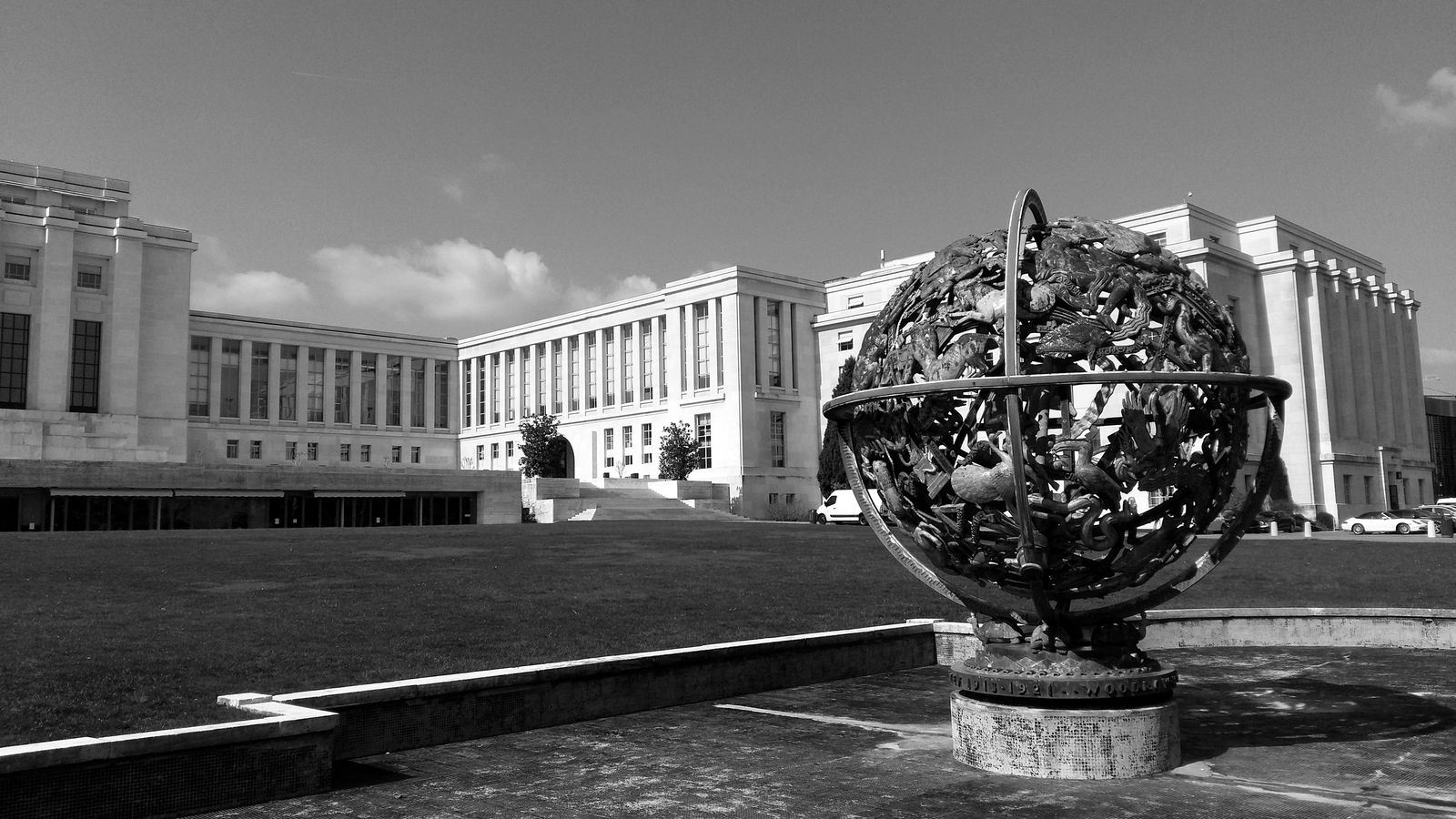
Guided tours show, among other things, the Human Rights and Alliance of Civilizations Room, with a ceiling by the artist Miquel Barceló, and explain how a UN conference works. Practical details are on the Science Travel page.
7A building for the League of Nations
The Palais has its own history. In 1926 the League of Nations launched an international architecture competition; 377 projects were submitted, and five architects from Switzerland, France, Italy and Hungary were chosen to develop the final design together. The foundation stone was laid on 7 September 1929, and in 1936 the League moved in from its earlier home, the Palais Wilson.
In April 1946 the League held its final Assembly, dissolved itself and handed its properties to the United Nations. The Ariana Park around the building had been left to the City of Geneva in 1890 by Gustave Revilliod. The Palais has been extended several times since, and since 2017 it has been renovated under a large programme, the Strategic Heritage Plan.
8Rules beyond politics
Not every international rule agreed in Geneva is political. Technical standards, the agreements that let a bank card fit card readers everywhere or a phone call cross a border, are drafted by experts from many countries, and three of the organisations that coordinate this work have their headquarters here. That story is told in the Science section and in the article on who writes the world’s technical standards.
Official texts
This page explains in our own words. For authoritative wording, always use the official documents linked in the sources.
Sources
- Permanent Mission of Switzerland to the UN Office at Geneva, Facts and figures about International Geneva, checked 29 October 2026
- United Nations Office at Geneva, Visiting UN Geneva, checked 29 October 2026
- Federal Department of Foreign Affairs (FDFA), Host State Act, checked 29 October 2026
- Permanent Mission of Switzerland to the UN Office at Geneva, Privileges and immunities: frequently asked questions, checked 29 October 2026
- United Nations Office at Geneva, Palais des Nations history, checked 29 October 2026